
Introduction
Baking is both an art and a science. Whether you’re dreaming of baking soft cakes, crispy cookies, fluffy muffins, or homemade bread, getting started can feel overwhelming. Many beginners jump into baking with excitement only to end up with flat cakes, hard cookies, or unevenly baked treats. The good news is that successful baking doesn’t require professional training—it simply requires understanding a few essential principles.
Unlike cooking, where ingredients can often be adjusted on the fly, baking relies on precise measurements and specific techniques. A small mistake can significantly affect the final result. Learning the fundamentals early will help you avoid common errors and build confidence in the kitchen.
In this guide, we’ll explore the top 10 baking tips every beginner should know. These practical tips will help you create delicious baked goods while making your baking journey more enjoyable and rewarding.
1. Always Measure Ingredients Accurately
One of the biggest mistakes One of the biggest mistakes beginners make is estimating ingredient quantities. Baking is a science, and precise measurements are critical. beginners make is estimating ingredient quantities. Baking is a science, and precise measurements are critical.
Why Accurate Measurement Matters
The balance between flour, sugar, butter, eggs, and leavening agents determines the texture, structure, and flavor of your baked goods. Even a small variation can affect the outcome.
Best Practices
- Use measuring cups designed specifically for dry ingredients.
- Use liquid measuring cups for milk, water, and oils.
- Level off dry ingredients using a straight edge.
- Consider investing in a digital kitchen scale for maximum accuracy.
Common Mistake
Scooping flour directly from the container can pack it tightly, resulting in too much flour and dry baked goods.
2. Read the Entire Recipe Before Starting
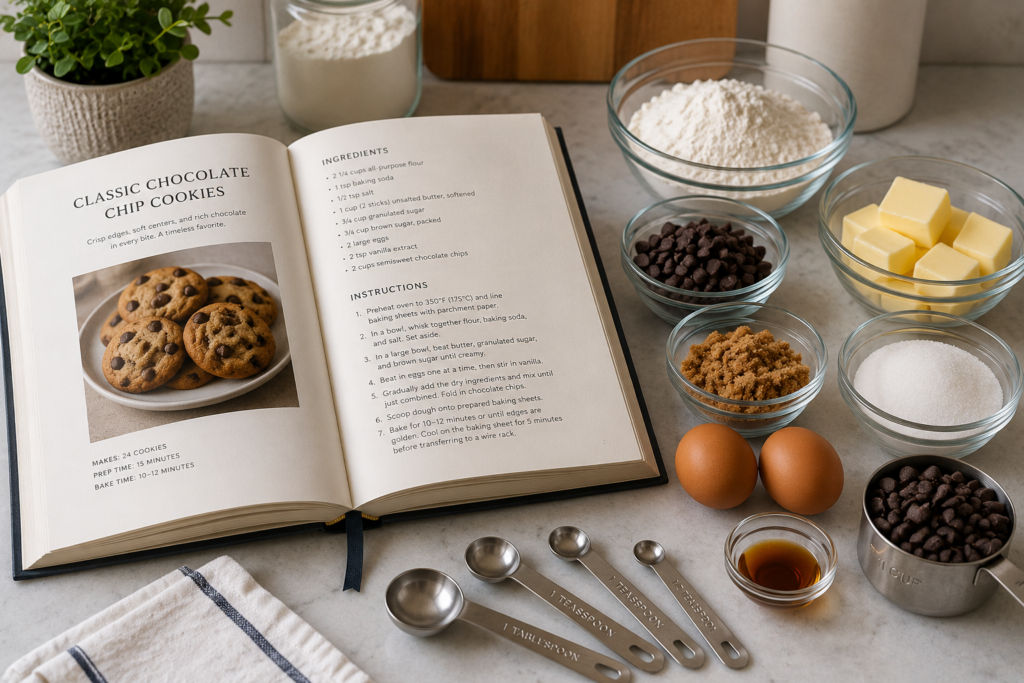
Many baking failures happen because bakers don’t read the recipe completely before beginning.
Why It Matters
Recipes often contain important instructions regarding ingredient preparation, oven temperatures, chilling times, or mixing methods.
Before You Start
- Read every step carefully.
- Gather all ingredients.
- Prepare necessary tools and equipment.
- Check baking times and temperatures.
Benefits
Reading ahead helps prevent surprises and ensures a smoother baking process.
3. Bring Ingredients to Room Temperature
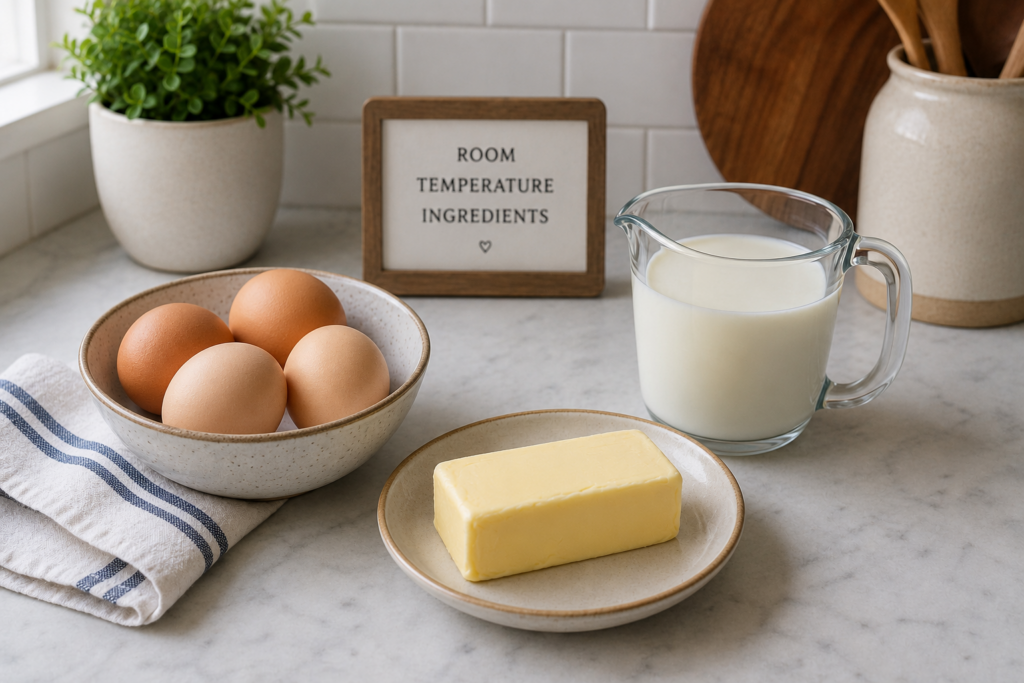
Many recipes call for room-temperature ingredients, especially butter, eggs, and milk.
Why Room Temperature Matters
Ingredients mix more evenly when they are at room temperature, creating a smoother batter and better texture.
Examples
- Butter creams more effectively with sugar.
- Eggs incorporate more easily into batters.
- Better air incorporation creates lighter cakes.
Quick Tips
- Leave eggs out for 30 minutes.
- Soften butter naturally rather than melting it.
- Place eggs in warm water for 5–10 minutes if needed.
4. Preheat Your Oven Properly
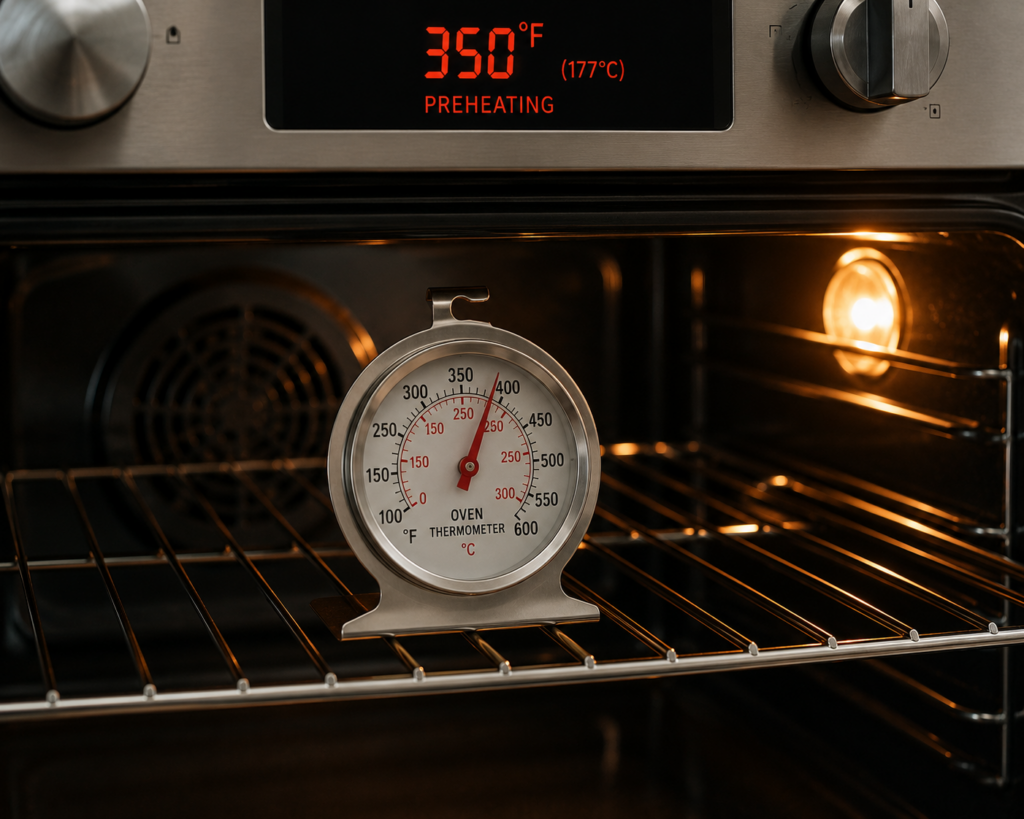
Your oven should always be fully preheated before baking.
Why Preheating Is Important
Baked goods begin reacting immediately once they enter the oven. An oven that hasn’t reached the correct temperature can affect:
- Cake rise
- Cookie spread
- Bread texture
- Baking consistency
Helpful Tips
- Preheat at least 15–20 minutes before baking.
- Use an oven thermometer for accuracy.
- Avoid opening the oven frequently.
Common Issue
Many home ovens run hotter or cooler than displayed settings.
5. Understand Your Ingredients
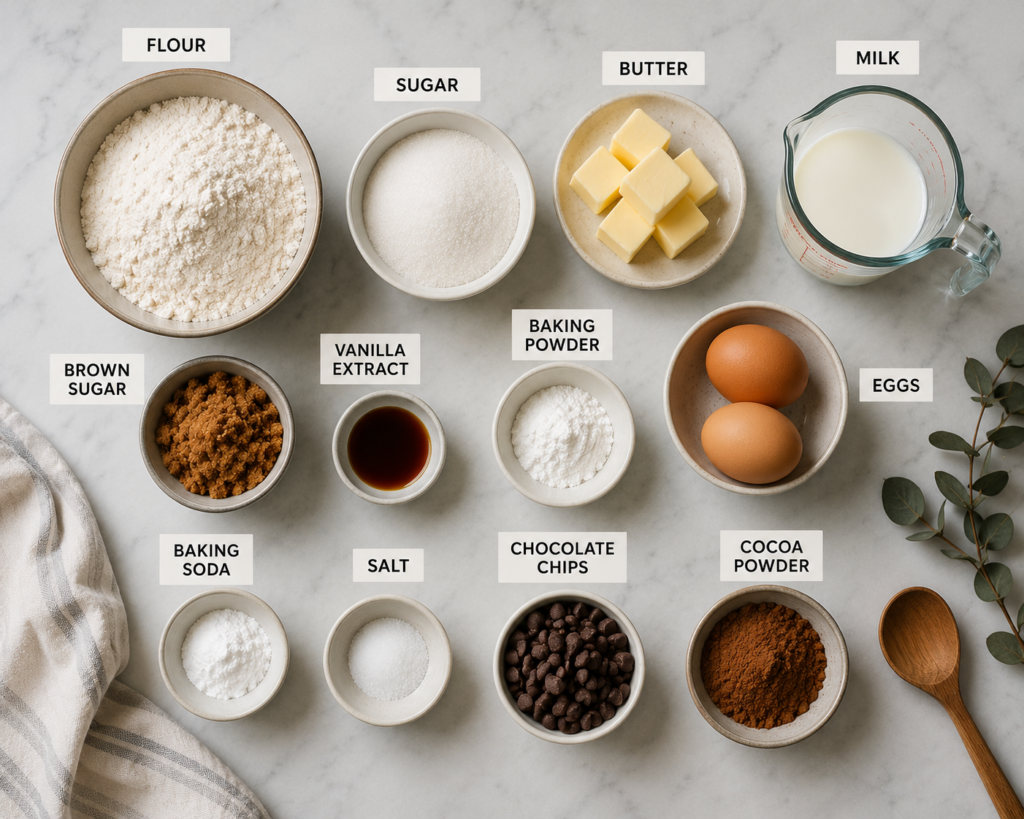
Every baking ingredient serves a specific purpose.
Flour
Provides structure and stability.
Sugar
Adds sweetness while helping retain moisture.
Eggs
Provide structure, moisture, and richness.
Butter
Contributes flavor and tenderness.
Baking Powder and Baking Soda
Help baked goods rise.
Salt
Enhances flavors and balances sweetness.
Why This Matters
Understanding ingredient functions allows you to troubleshoot problems and improve recipes over time.
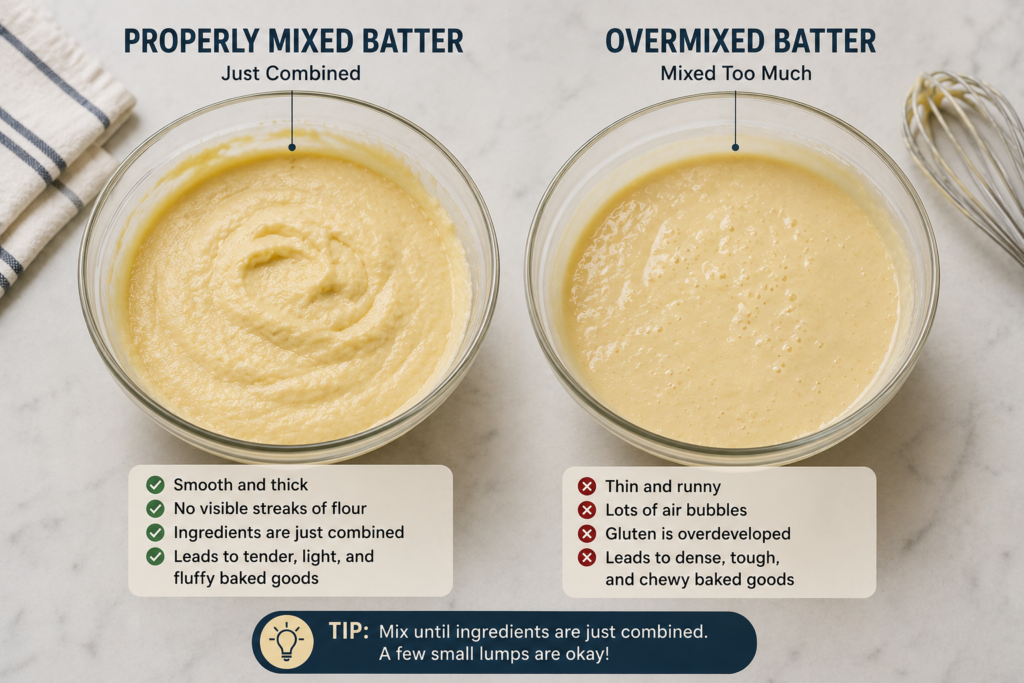
6. Don’t Overmix the Batter
Many beginners assume that more mixing equals better results. In reality, overmixing can ruin baked goods.
What Happens When You Overmix?
Overmixing develops excess gluten in flour, leading to:
- Tough cakes
- Dense muffins
- Chewy cookies
Proper Mixing Techniques
- Mix until ingredients are just combined.
- Follow recipe instructions carefully.
- Use gentle folding techniques when required.
Signs You’ve Mixed Enough
The batter should appear smooth with no visible dry flour.
7. Use the Correct Baking Pan
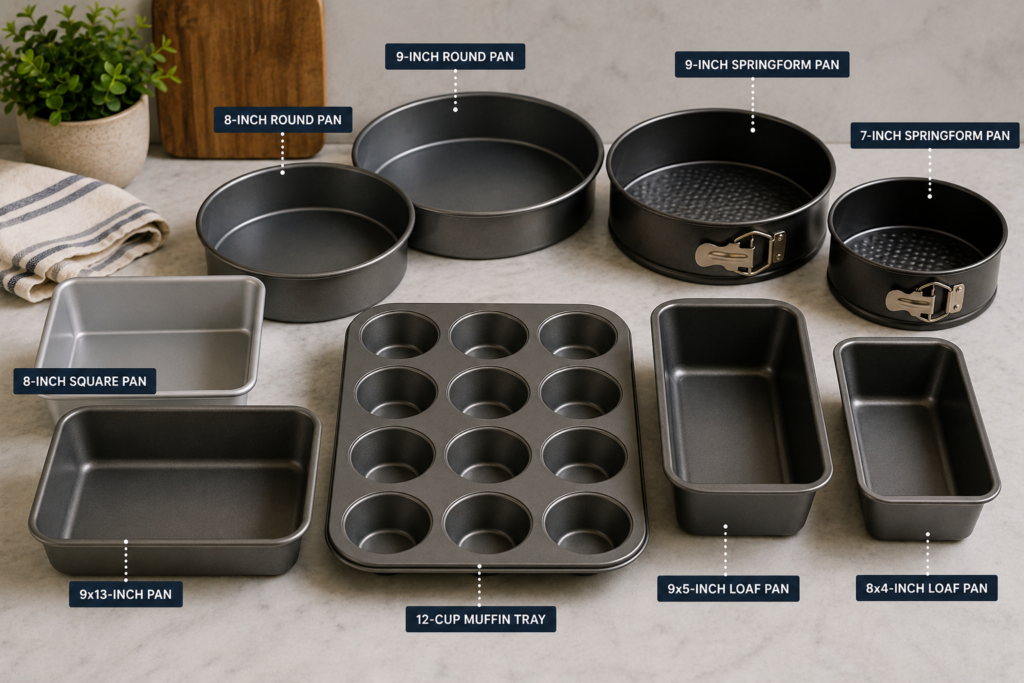
The type and size of your baking pan significantly affect baking results.
Why Pan Size Matters
Different pans distribute heat differently.
Examples
- Dark pans bake faster.
- Glass pans retain heat longer.
- Metal pans provide even baking.
Follow Recipe Recommendations
Using a larger or smaller pan than specified can change baking times and textures.
Helpful Tip
Grease and line pans properly to prevent sticking.
8. Learn Basic Oven Placement
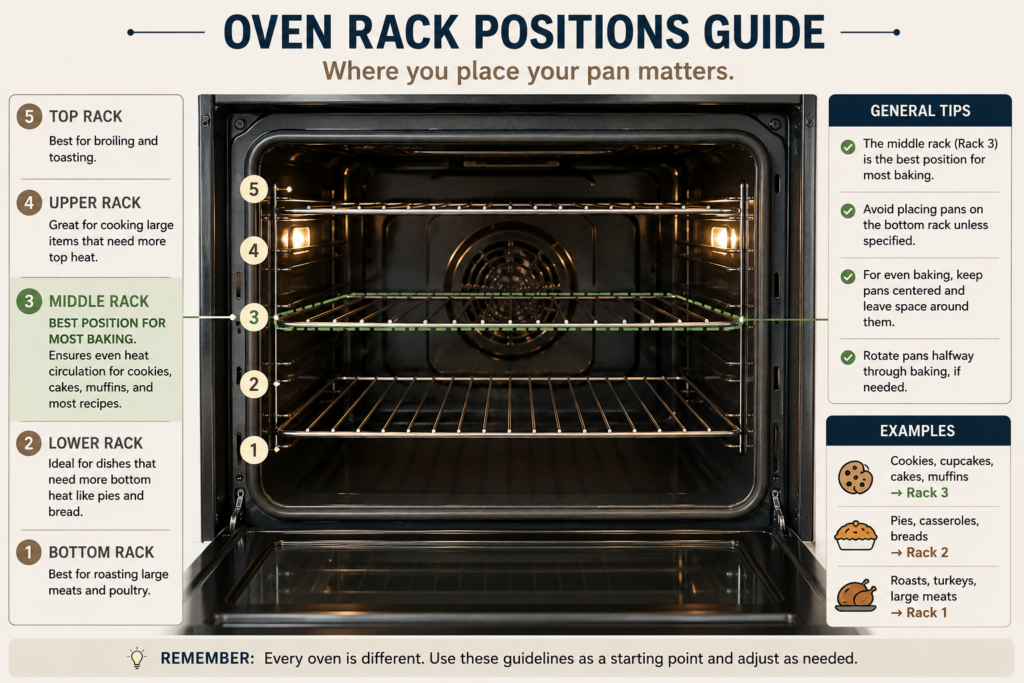
Where you place your baked goods inside the oven matters more than many beginners realize.
Best Position
The center rack generally provides the most even heat circulation.
Avoid
- Top rack for delicate cakes
- Bottom rack for cookies unless specified
Rotate When Necessary
For uneven ovens, rotate pans halfway through baking.
Important Note
Avoid opening the oven door too early, especially when baking cakes.
9. Test for Doneness Correctly
Baking times are guidelines, not guarantees.
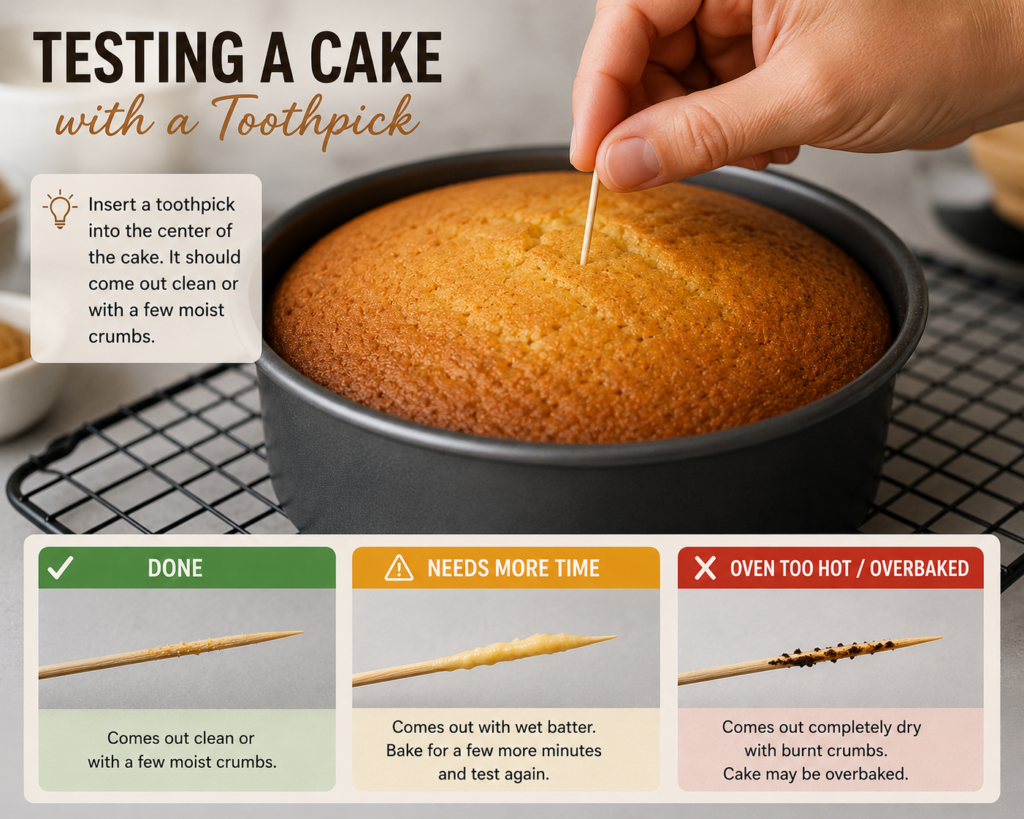
How to Check Cakes
Insert a toothpick into the center:
- Clean toothpick = done
- Wet batter = needs more time
Cookies
Look for lightly golden edges.
Bread
Tap the bottom; it should sound hollow.
Why It Matters
Overbaking can dry out baked goods, while underbaking leaves them raw inside.
10. Allow Baked Goods to Cool Properly
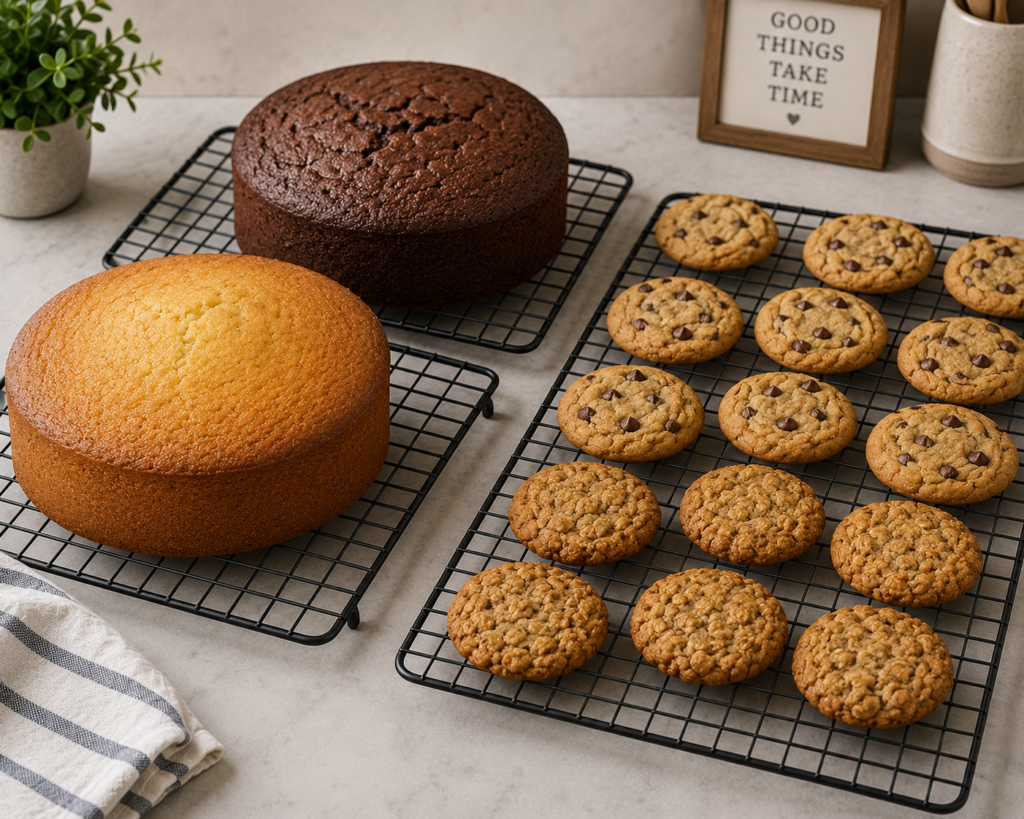
Cooling is an essential step that many beginners rush through.
Why Cooling Matters
Freshly baked goods continue cooking internally after leaving the oven.
Benefits of Proper Cooling
- Improved texture
- Better flavor development
- Easier frosting and decorating
Cooling Tips
- Allow cakes to cool in pans briefly.
- Transfer to cooling racks.
- Wait completely before frosting.
Common Mistake
Applying frosting to warm cakes causes melting and sliding.
Bonus Baking Tips for Faster Improvement
Keep Notes
Maintain a baking journal to record:
- Recipe changes
- Baking times
- Oven adjustments
Practice Consistently
The more you bake, the better you’ll understand ingredient behavior and techniques.
Start Simple
Begin with:
- Vanilla cupcakes
- Chocolate chip cookies
- Banana bread
- Basic sponge cake
Learn from Mistakes
Every baking error is an opportunity to improve.
Common Beginner Baking Mistakes to Avoid
- Skipping ingredient measurements
- Using expired baking powder
- Opening the oven too frequently
- Overmixing batter
- Ignoring cooling time
- Substituting ingredients without understanding their purpose
Recognizing these mistakes early can save time, money, and frustration.
Essential Tools Every Beginner Baker Should Own
Measuring Tools
- Measuring cups
- Measuring spoons
- Digital scale
Mixing Equipment
- Mixing bowls
- Silicone spatulas
- Whisk
Baking Equipment
- Cake pans
- Muffin trays
- Cooling racks
- Oven thermometer
Optional Upgrades
- Stand mixer
- Piping bags
- Offset spatula
Investing in quality tools makes baking easier and more enjoyable.
Conclusion
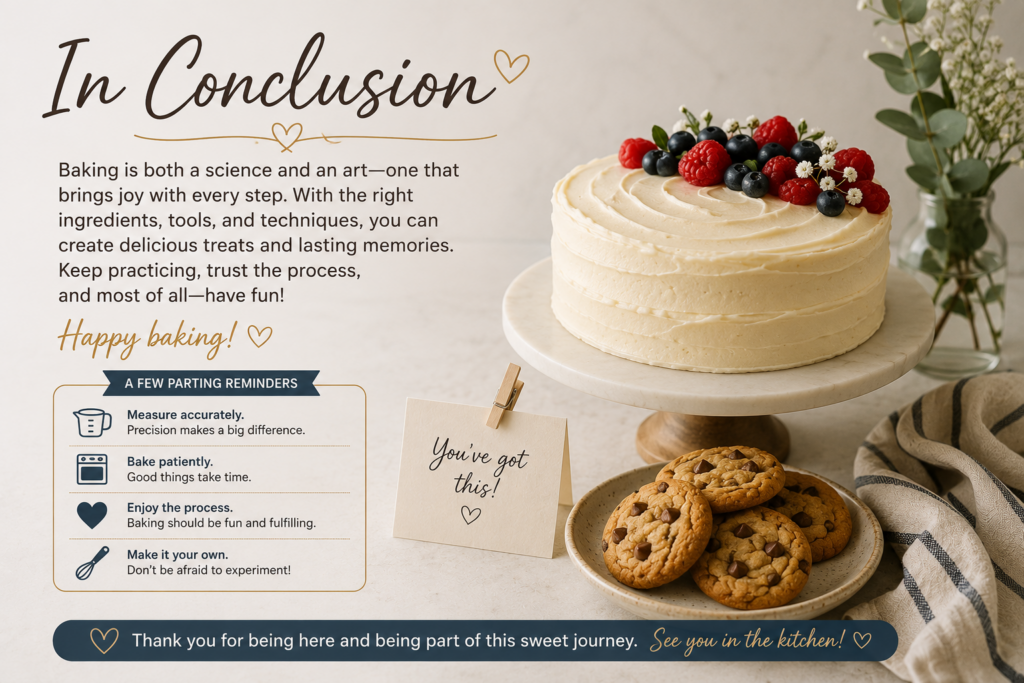
Baking may seem intimidating at first, but mastering a few fundamental techniques can dramatically improve your results. Accurate measurements, proper ingredient preparation, understanding baking science, and patience during cooling all contribute to successful baking.
Remember that every experienced baker started as a beginner. Mistakes are part of the learning process, and each batch teaches valuable lessons. By following these top 10 baking tips, you’ll build confidence, improve consistency, and create delicious baked goods that family and friends will love.
Whether you’re baking your first batch of cookies or preparing a celebration cake, these foundational tips will help set you up for success. Put on your apron, preheat the oven, and enjoy the wonderful journey of baking!