Introduction
Bread has been a staple food for thousands of years, nourishing civilizations across the globe. Today, however, consumers face a choice between mass-produced store-bought bread and handcrafted artisan bread. While both may appear similar at first glance, there are significant differences in quality, ingredients, flavor, nutrition, and production methods.
In recent years, artisan bread has experienced a remarkable resurgence as more people seek healthier, fresher, and more authentic food options. From rustic sourdough loaves and crusty baguettes to hearty whole-grain creations, artisan bread offers an experience that goes far beyond simply making a sandwich.
But what exactly makes artisan bread superior to conventional supermarket bread? Is it just a trend, or are there genuine benefits that justify its popularity?
In this article, we’ll explore why artisan bread is better than store-bought bread and why more people are choosing handcrafted loaves for their daily meals.
What Is Artisan Bread?
Artisan bread refers to bread that is handcrafted using traditional baking methods. It is typically made in small batches by skilled bakers who prioritize quality over mass production.
Characteristics of Artisan Bread
- Made by hand or with minimal machinery
- Uses simple, natural ingredients
- Often fermented slowly
- Free from excessive preservatives
- Unique appearance and texture
- Rich flavor development
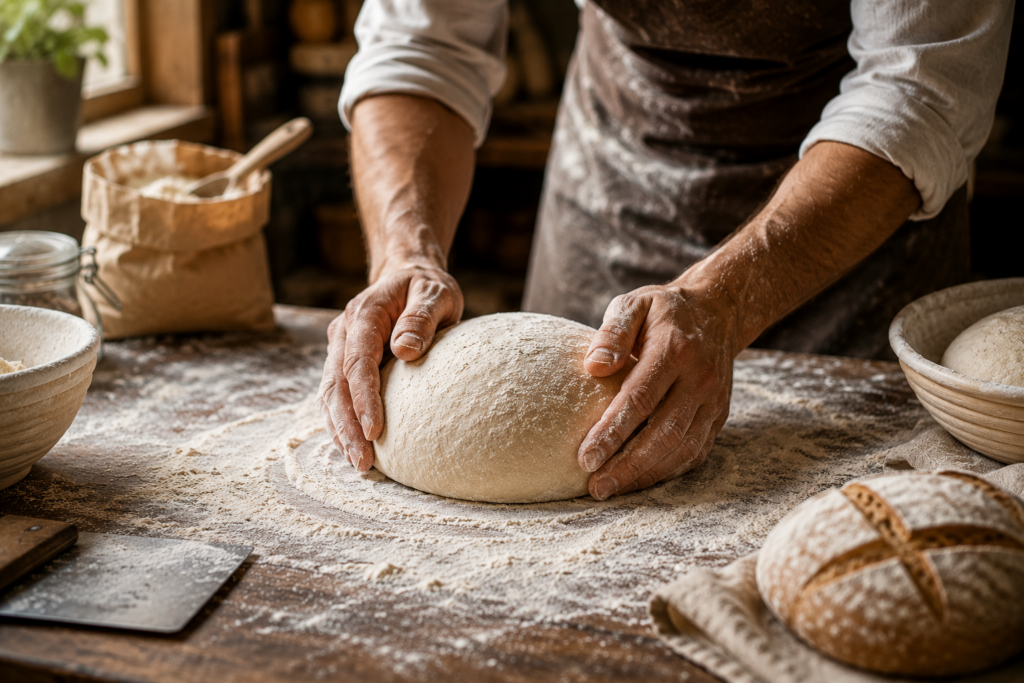
Unlike factory-produced bread, artisan bread focuses on craftsmanship, patience, and traditional baking techniques.
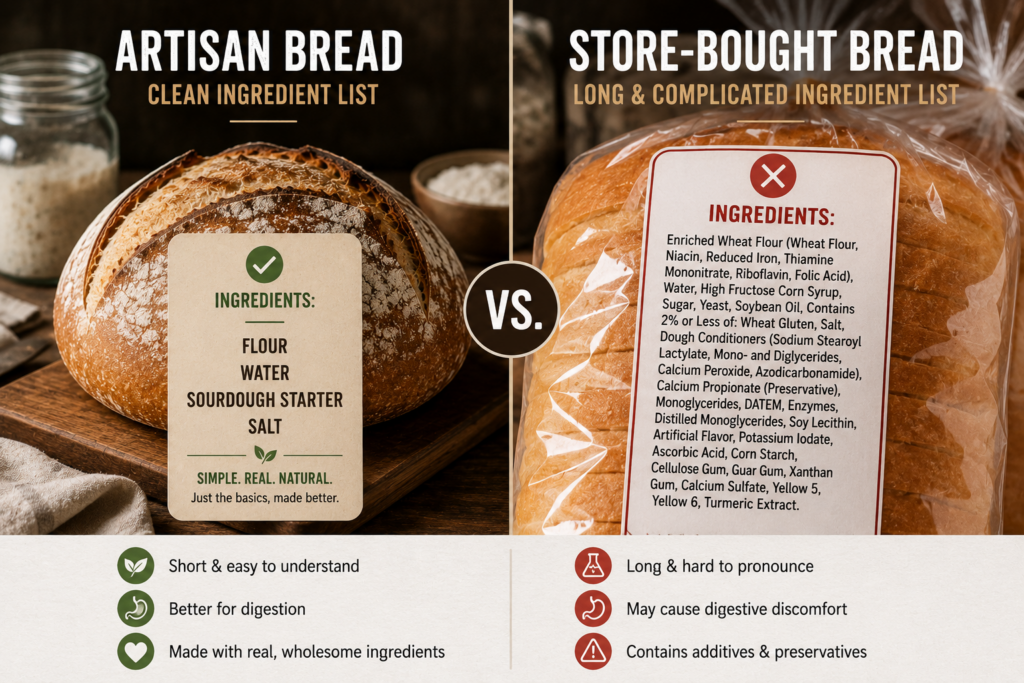
1. Artisan Bread Uses Better Ingredients
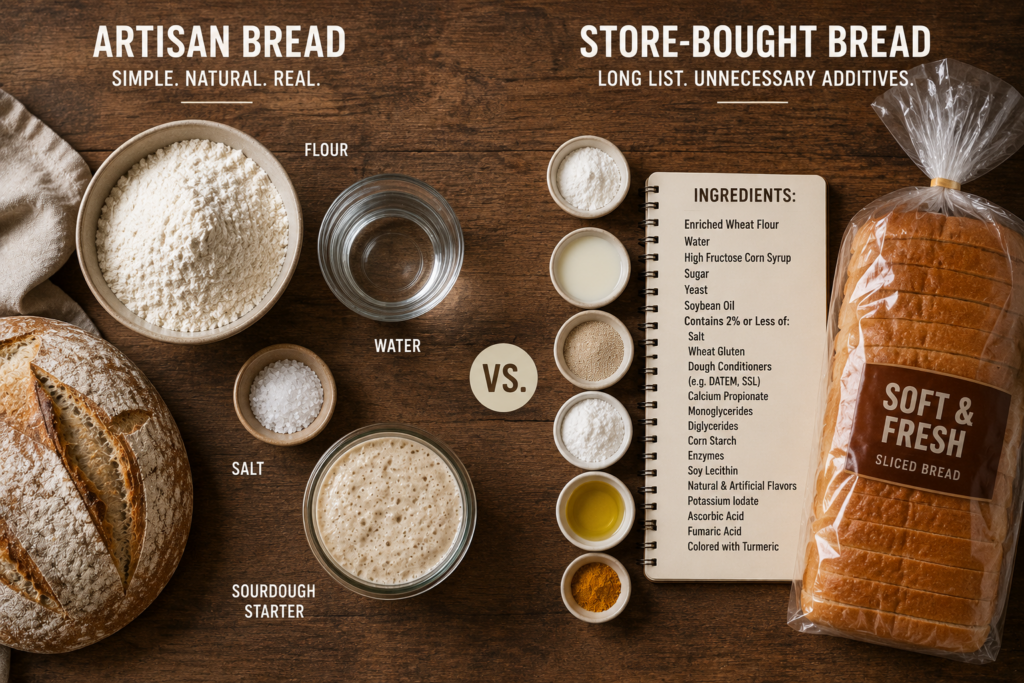
One of the biggest advantages of artisan bread is the quality of its ingredients.
Typical Artisan Bread Ingredients
- Flour
- Water
- Salt
- Natural yeast or sourdough starter
That’s often all that’s needed.
Store-Bought Bread Ingredients
Commercial bread frequently contains:
- Preservatives
- Dough conditioners
- Artificial flavors
- Added sugars
- Emulsifiers
- Stabilizers
Many packaged breads contain ingredient lists with 20 or more items.
Why Simplicity Matters
Simple ingredients allow the natural flavors of the grain and fermentation process to shine through while reducing unnecessary additives.
2. Superior Flavor and Aroma
The flavor difference between artisan and store-bought bread is immediately noticeable.
Slow Fermentation Creates Better Taste
Artisan bread often undergoes long fermentation periods ranging from several hours to several days.
This process:
- Develops complex flavors
- Enhances aroma
- Creates subtle tanginess
- Produces richer textures
Store-Bought Bread Prioritizes Speed
Commercial bakeries focus on efficiency and rapid production.
As a result:
- Dough rises quickly
- Flavor development is limited
- Bread often tastes bland or overly sweet
The Artisan Experience
Every loaf develops its own personality through fermentation, creating a depth of flavor that mass-produced bread rarely achieves.
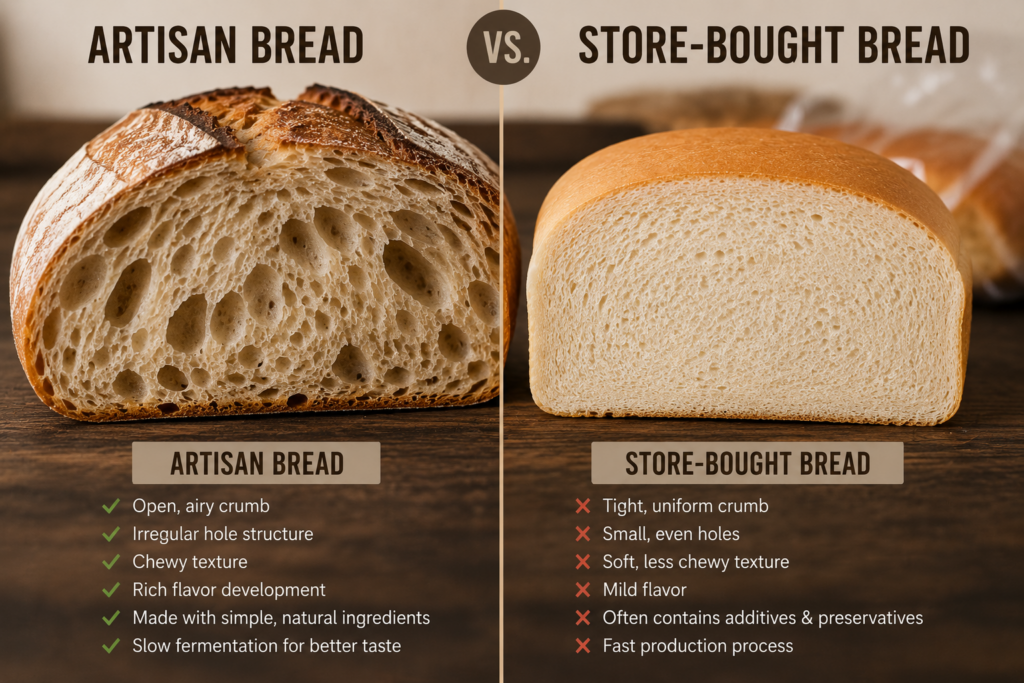
3. Better Texture and Crust
Texture is another area where artisan bread excels.
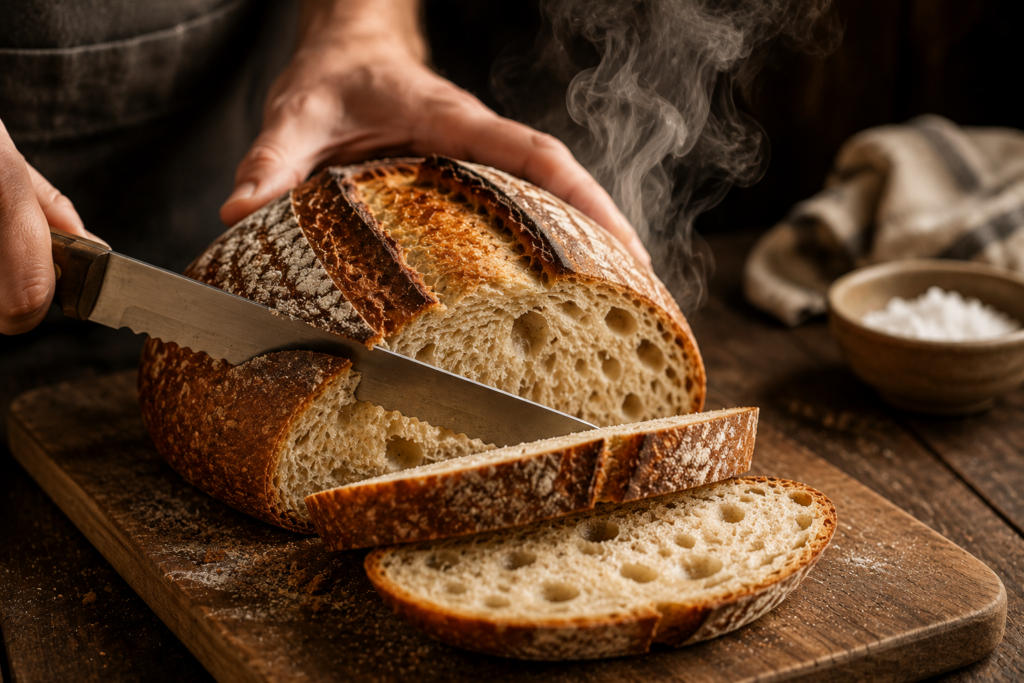
Artisan Bread Features
- Crispy crust
- Chewy interior
- Open crumb structure
- Moist texture
Store-Bought Bread Features
- Soft crust
- Uniform texture
- Dense crumb
- Less character
Why Texture Matters
The contrast between a crunchy crust and a soft interior creates a satisfying eating experience that enhances everything from sandwiches to simple slices with butter.
4. Fewer Preservatives and Additives
Many consumers today are becoming more conscious about what goes into their food.
Artisan Bread
Most artisan bakers avoid:
- Artificial preservatives
- Chemical stabilizers
- Synthetic flavor enhancers
Store-Bought Bread
Because commercial bread needs a longer shelf life, manufacturers often add ingredients designed to keep bread soft and fresh for extended periods.
Cleaner Labels
Artisan bread generally provides a cleaner ingredient list, making it easier for consumers to understand exactly what they are eating.
5. Improved Digestibility
Many people report that artisan bread feels easier to digest.
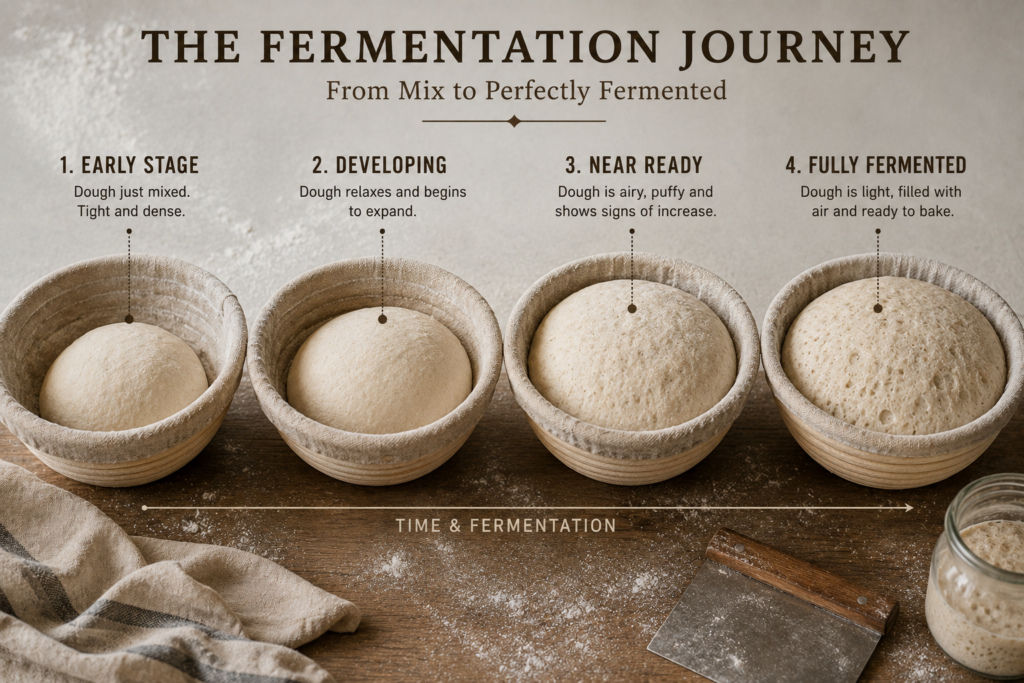
The Role of Fermentation
Long fermentation allows natural enzymes and beneficial microorganisms to break down complex compounds within the dough.
This process can:
- Reduce phytic acid
- Improve mineral absorption
- Partially break down gluten proteins
- Support easier digestion
Sourdough Benefits
Many artisan breads are sourdough-based.
Sourdough fermentation contributes to:
- Better nutrient availability
- Enhanced flavor
- Potential digestive benefits
While artisan bread is not gluten-free, many individuals find it gentler on their digestive systems.
6. Higher Nutritional Value
Artisan bread often contains more nutrients than heavily processed alternatives.
Why?
Traditional baking methods preserve more of the grain’s natural characteristics.
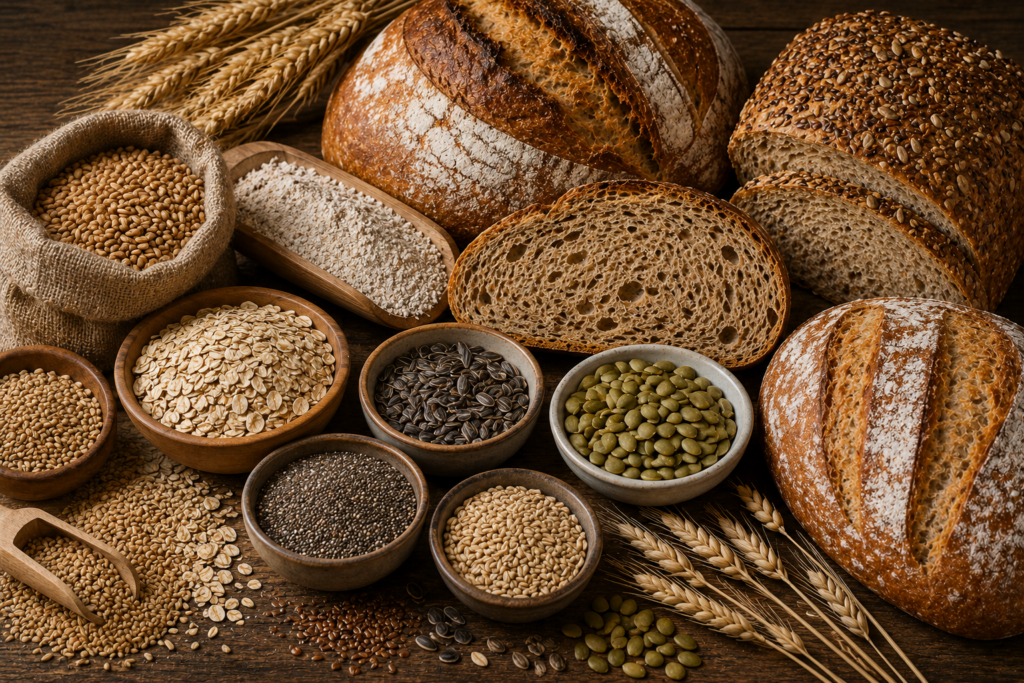
Common Artisan Bread Ingredients
- Whole wheat flour
- Rye flour
- Ancient grains
- Seeds
- Oats
Nutritional Benefits
These ingredients can provide:
- Fiber
- Protein
- Vitamins
- Minerals
- Antioxidants
The result is bread that not only tastes better but also offers greater nutritional value.
7. No Excess Sugar
Many commercial breads contain surprising amounts of added sugar.
Why Sugar Is Added
Manufacturers use sugar to:
- Speed fermentation
- Improve shelf life
- Enhance flavor
- Create uniform browning
Artisan Bread Approach
Artisan bakers generally rely on natural fermentation and quality ingredients rather than excessive sweeteners.
This creates a more balanced and authentic flavor profile.
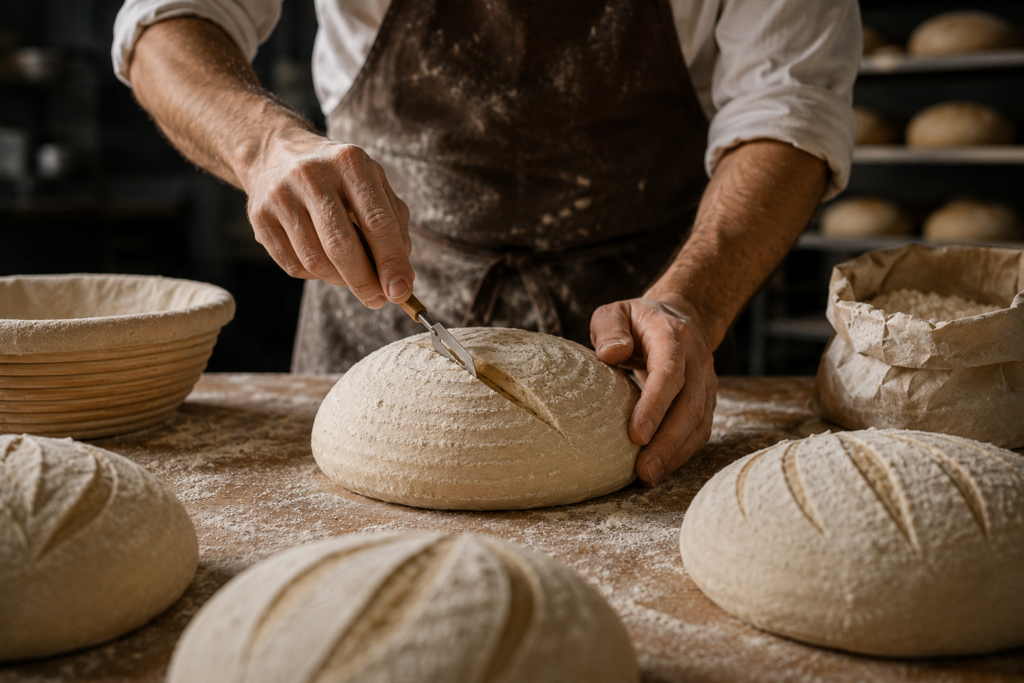
8. Traditional Craftsmanship Matters
Every artisan loaf reflects the skill and experience of the baker.
Handcrafted Attention
Artisan bakers carefully manage:
- Dough hydration
- Fermentation timing
- Shaping techniques
- Scoring patterns
- Baking conditions
Each Loaf Is Unique
Unlike machine-made bread, artisan loaves often vary slightly in appearance, which reflects their handmade nature.
These variations are signs of craftsmanship rather than defects.
9. Better for Supporting Local Businesses
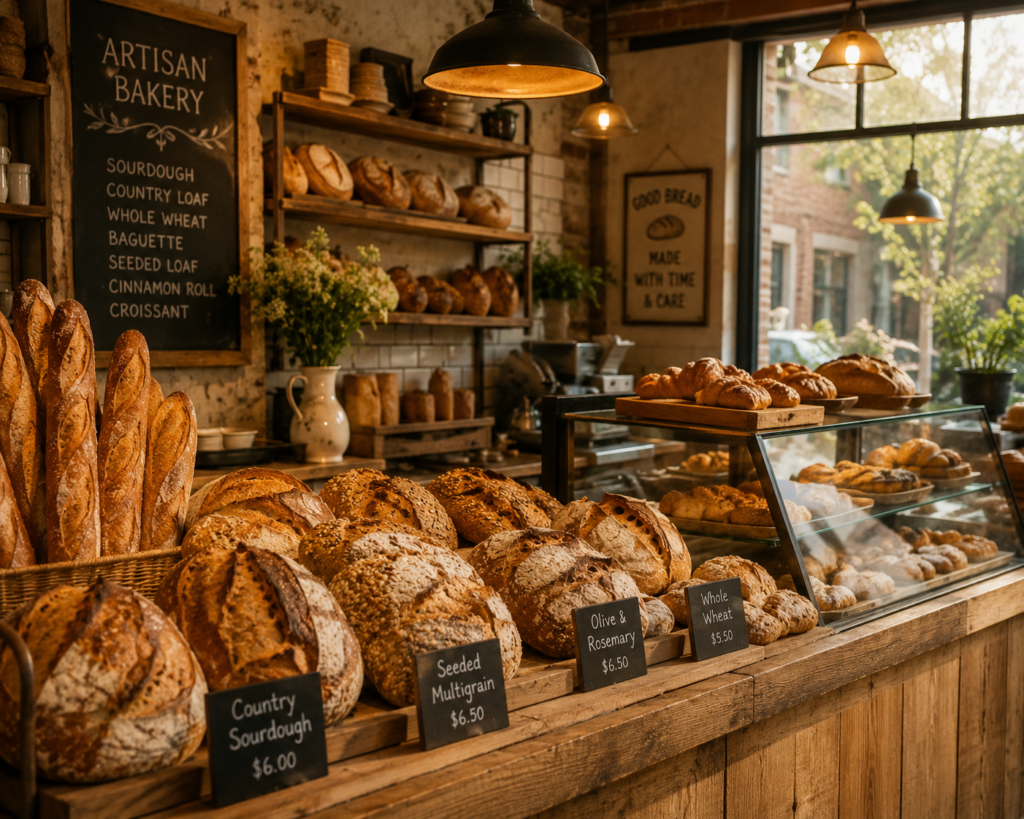
Choosing artisan bread often means supporting local bakeries and small businesses.
Benefits to the Community
Purchasing from local bakers helps:
- Support small business owners
- Create local jobs
- Strengthen community economies
- Preserve traditional baking skills
Sustainable Impact
Many artisan bakeries source ingredients locally whenever possible, reducing transportation distances and supporting regional agriculture.
10. Greater Variety and Creativity
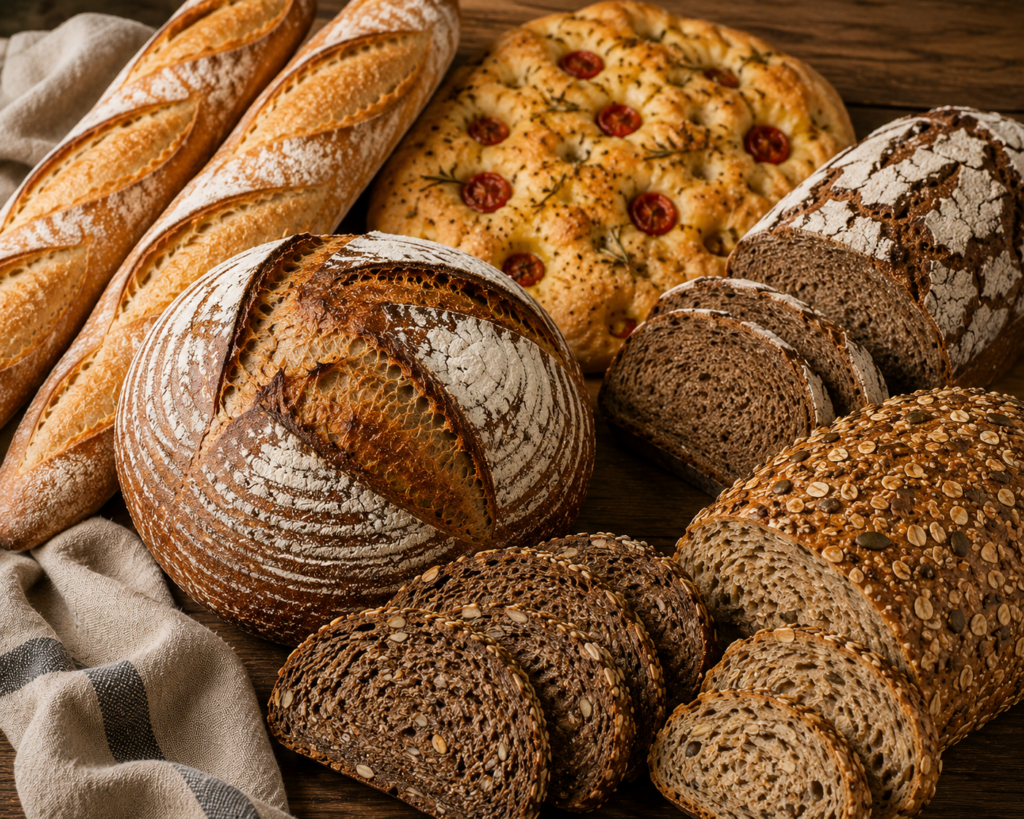
Artisan bakers have the freedom to experiment with unique ingredients and techniques.
Popular Artisan Bread Varieties
- Sourdough
- Multigrain
- Rye
- Ciabatta
- Baguette
- Focaccia
- Olive bread
- Walnut bread
- Seeded loaves
Seasonal Specialties
Many artisan bakeries create limited-edition breads featuring:
- Herbs
- Fruits
- Nuts
- Specialty grains
This variety allows customers to discover exciting new flavors.
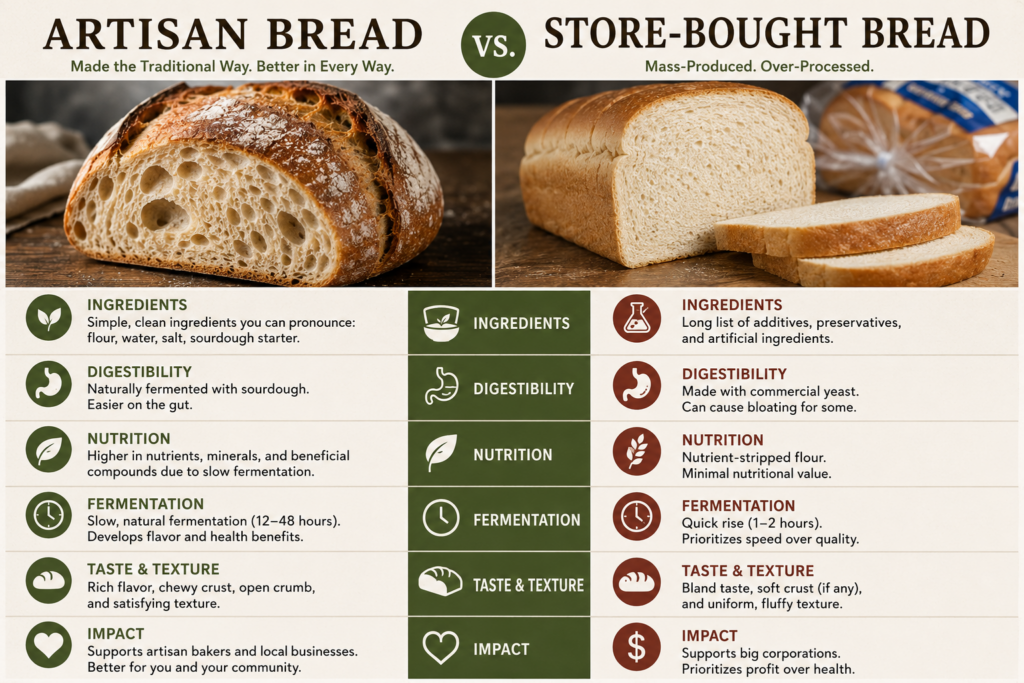
Artisan Bread vs Store-Bought Bread: Quick Comparison
| Feature | Artisan Bread | Store-Bought Bread |
| Ingredients | Simple & Natural | Often Processed |
| Flavor | Rich & Complex | Mild & Uniform |
| Texture | Crusty & Chewy | Soft & Consistent |
| Fermentation | Slow | Fast |
| Preservatives | Minimal | Often Included |
| Nutrition | Generally Higher | Often Lower |
| Shelf Life | Shorter | Longer |
| Craftsmanship | Handmade | Machine Produced |
Common Myths About Artisan Bread
Myth 1: Artisan Bread Is Just Expensive Bread
Reality: The higher cost reflects better ingredients, longer fermentation times, and skilled labor.
Myth 2: Artisan Bread Is Only for Food Enthusiasts
Reality: Anyone who enjoys quality food can appreciate artisan bread.
Myth 3: Store-Bought Bread Is Just as Healthy
Reality: Ingredient quality and processing methods often differ significantly.
Myth 4: Artisan Bread Doesn’t Last Long
Reality: While artisan bread contains fewer preservatives, proper storage can keep it fresh for several days.
How to Identify Real Artisan Bread
Look for Short Ingredient Lists
A quality artisan loaf usually contains only a few recognizable ingredients.
Examine the Crust
Artisan bread often features:
- Deep golden color
- Crisp texture
- Natural scoring marks
Check the Interior
Look for:
- Open crumb structure
- Irregular air pockets
- Moist texture
Ask Questions
Authentic bakers are usually happy to discuss:
- Ingredients
- Fermentation methods
- Baking process
Why More Consumers Are Choosing Artisan Bread
Modern consumers increasingly value:
- Transparency
- Natural ingredients
- Better nutrition
- Local businesses
- Authentic food experiences
Artisan bread aligns perfectly with these priorities.
As awareness grows regarding food quality and ingredient sourcing, artisan bakeries continue to gain popularity worldwide.
Conclusion
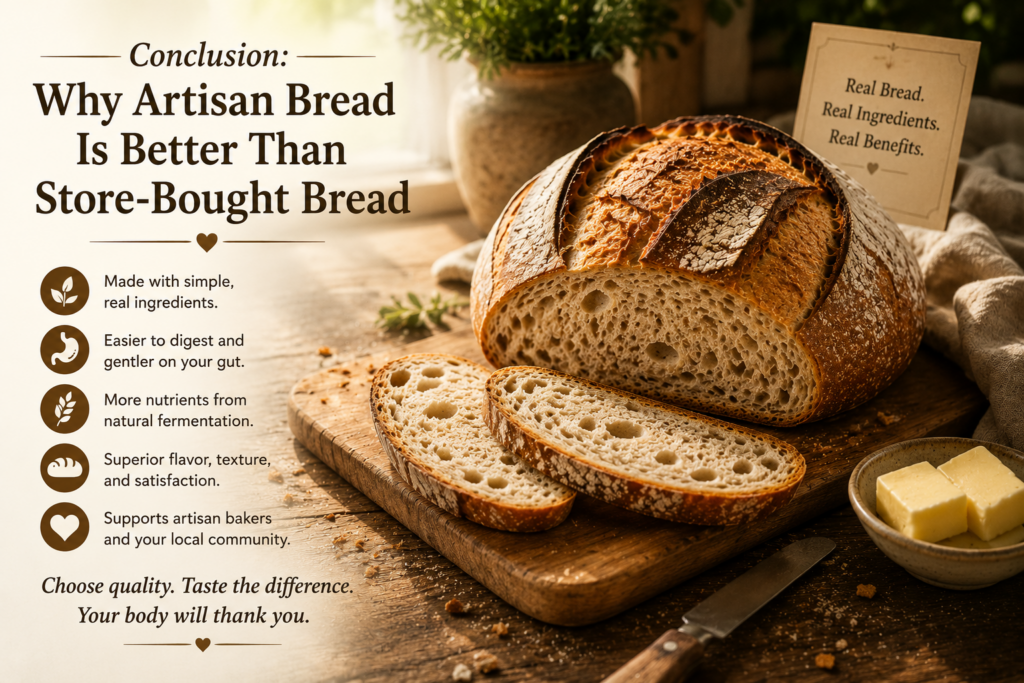
Artisan bread represents far more than a simple loaf of bread. It embodies traditional craftsmanship, quality ingredients, patience, and passion. Compared to store-bought bread, artisan bread offers superior flavor, better texture, improved nutritional value, fewer additives, and a more authentic baking experience.
While supermarket bread may offer convenience and longer shelf life, artisan bread delivers something that mass production cannot replicate: character. Every loaf tells a story of careful fermentation, skilled craftsmanship, and dedication to quality.
Whether you’re enjoying a rustic sourdough, a hearty whole-grain loaf, or a crusty baguette fresh from a local bakery, artisan bread provides a richer and more satisfying experience. Once you’ve tasted truly handcrafted bread, it’s easy to understand why so many people believe artisan bread is worth every bite.
Fresh, flavorful, and made with care—artisan bread truly stands above the rest.